
Anxiety, Depression & Skin Health
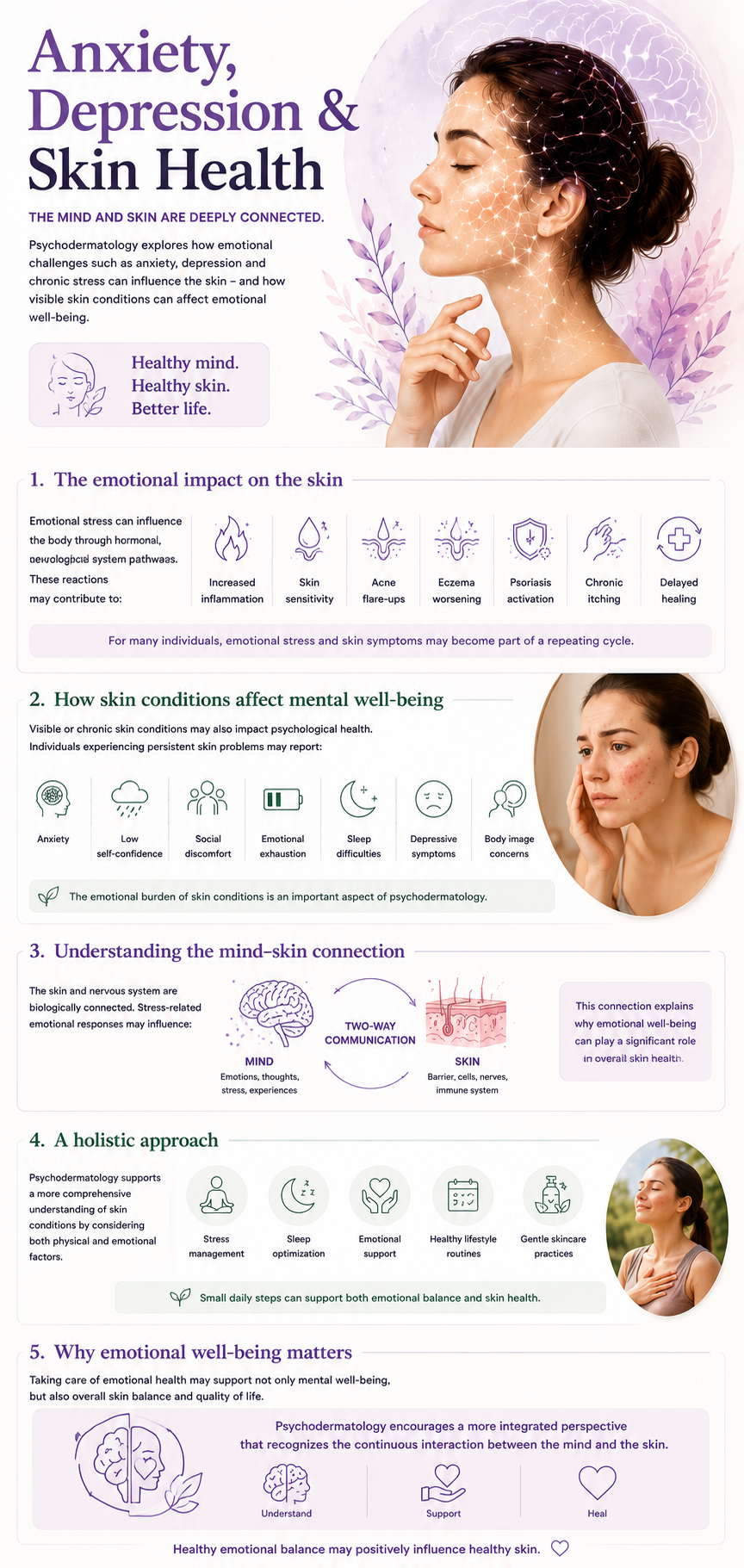
Mental health and skin health are closely interconnected.
Psychodermatology explores how conditions such as anxiety, depression, chronic stress, and emotional distress may influence the skin — and how visible skin conditions may also affect emotional well-being.
The emotional impact on the skin
Emotional stress can influence the body through hormonal, neurological, and immune system pathways.
These reactions may contribute to:
- Increased inflammation
- Skin sensitivity
- Acne flare-ups
- Eczema worsening
- Psoriasis activation
- Chronic itching
- Delayed healing
For many individuals, emotional stress and skin symptoms may become part of a repeating cycle.
How skin conditions affect mental well-being
Visible or chronic skin conditions may also impact psychological health.
Individuals experiencing persistent skin problems may report:
- Anxiety
- Low self-confidence
- Social discomfort
- Emotional exhaustion
- Sleep difficulties
- Depressive symptoms
- Body image concerns
The emotional burden of skin conditions is an important aspect of psychodermatology.
Understanding the mind–skin connection
The skin and nervous system are biologically connected.
Stress-related emotional responses may influence:
- Inflammatory activity
- Hormonal balance
- Immune system responses
- Skin barrier function
- Sensory nerve activity
This explains why emotional well-being can play a significant role in overall skin health.
A holistic approach
Psychodermatology supports a more comprehensive understanding of skin conditions by considering both physical and emotional factors.
Supportive approaches may include:
- Stress management
- Sleep optimization
- Emotional support
- Healthy lifestyle routines
- Gentle skincare practices
- Psychological awareness
Why emotional well-being matters
Taking care of emotional health may support not only mental well-being, but also overall skin balance and quality of life.
Psychodermatology encourages a more integrated perspective that recognizes the continuous interaction between the mind and the skin.
Healthy emotional balance may positively influence healthy skin.
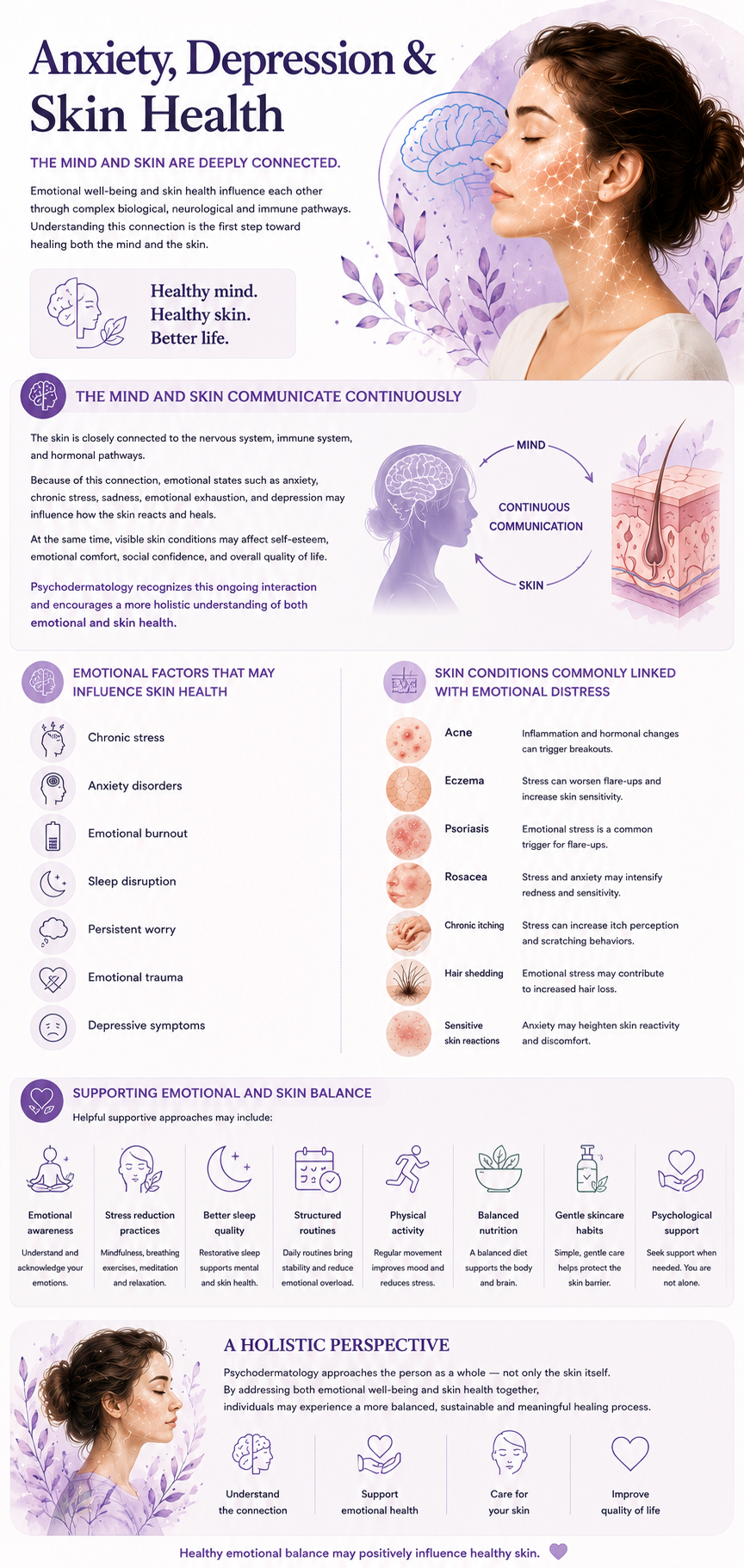
The mind and skin communicate continuously
The skin is closely connected to the nervous system, immune system, and hormonal pathways.
Because of this connection, emotional states such as anxiety, chronic stress, sadness, emotional exhaustion, and depression may influence how the skin reacts and heals.
At the same time, visible skin conditions may affect self-esteem, emotional comfort, social confidence, and overall quality of life.
Psychodermatology recognizes this ongoing interaction and encourages a more holistic understanding of both emotional and skin health.
Emotional factors that may influence skin health
- Chronic stress
- Anxiety disorders
- Emotional burnout
- Sleep disruption
- Persistent worry
- Emotional trauma
- Depressive symptoms
Skin conditions commonly linked with emotional distress
- Acne
- Eczema
- Psoriasis
- Rosacea
- Chronic itching
- Hair shedding
- Sensitive skin reactions
Supporting emotional and skin balance
Helpful supportive approaches may include:
- Emotional awareness
- Stress reduction practices
- Better sleep quality
- Structured routines
- Physical activity
- Balanced nutrition
- Gentle skincare habits
- Psychological support when needed
Psychodermatology approaches the person as a whole — not only the skin itself.
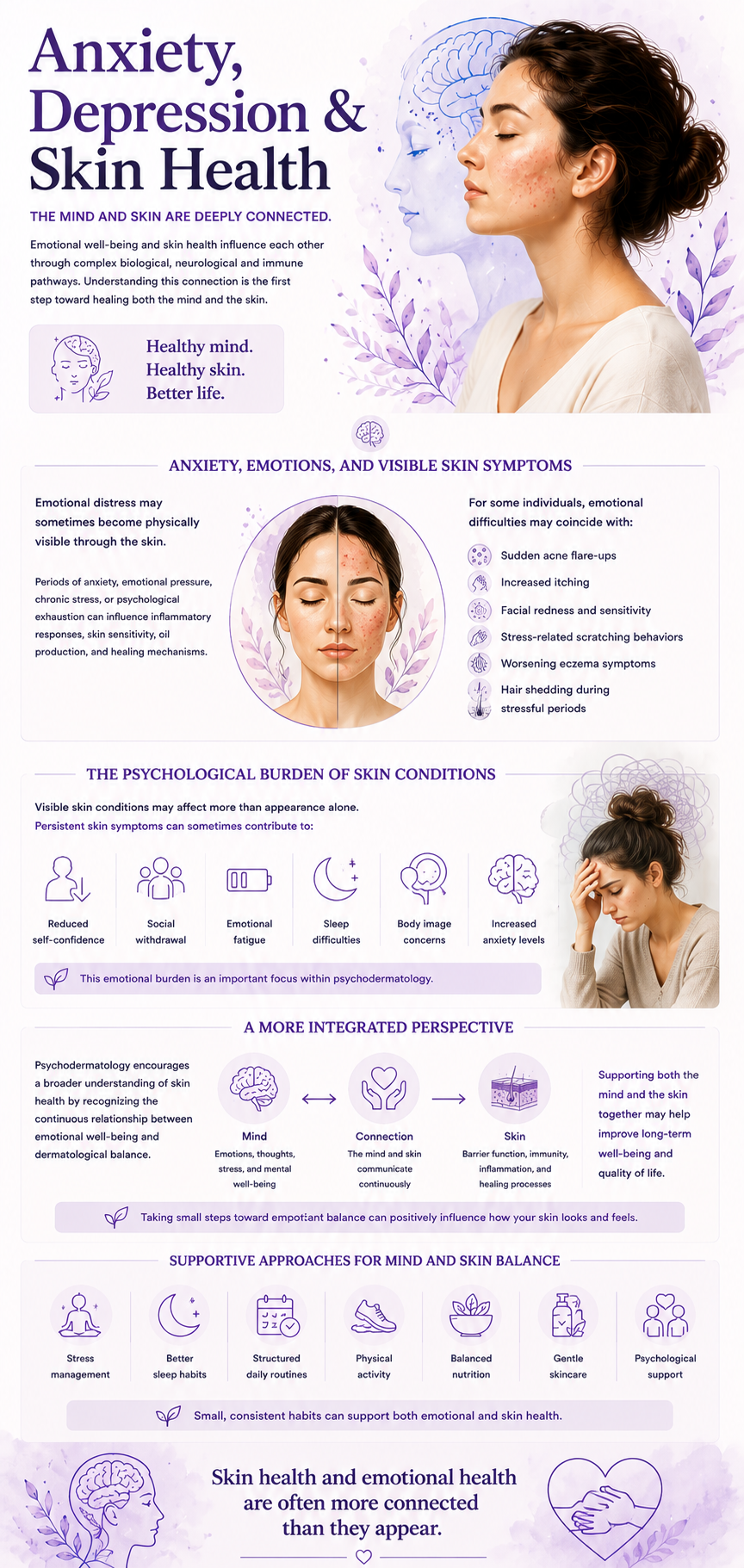
Anxiety, emotions, and visible skin symptoms
Emotional distress may sometimes become physically visible through the skin.
Periods of anxiety, emotional pressure, chronic stress, or psychological exhaustion can influence inflammatory responses, skin sensitivity, oil production, and healing mechanisms.
For some individuals, emotional difficulties may coincide with:
- Sudden acne flare-ups
- Increased itching
- Facial redness and sensitivity
- Stress-related scratching behaviors
- Worsening eczema symptoms
- Hair shedding during stressful periods
The psychological burden of skin conditions
Visible skin conditions may affect more than appearance alone.
Persistent skin symptoms can sometimes contribute to:
- Reduced self-confidence
- Social withdrawal
- Emotional fatigue
- Sleep difficulties
- Body image concerns
- Increased anxiety levels
This emotional burden is an important focus within psychodermatology.
A more integrated perspective
Psychodermatology encourages a broader understanding of skin health by recognizing the continuous relationship between emotional well-being and dermatological balance.
Supporting both the mind and the skin together may help improve long-term well-being and quality of life.
Skin health and emotional health are often more connected than they appear.