
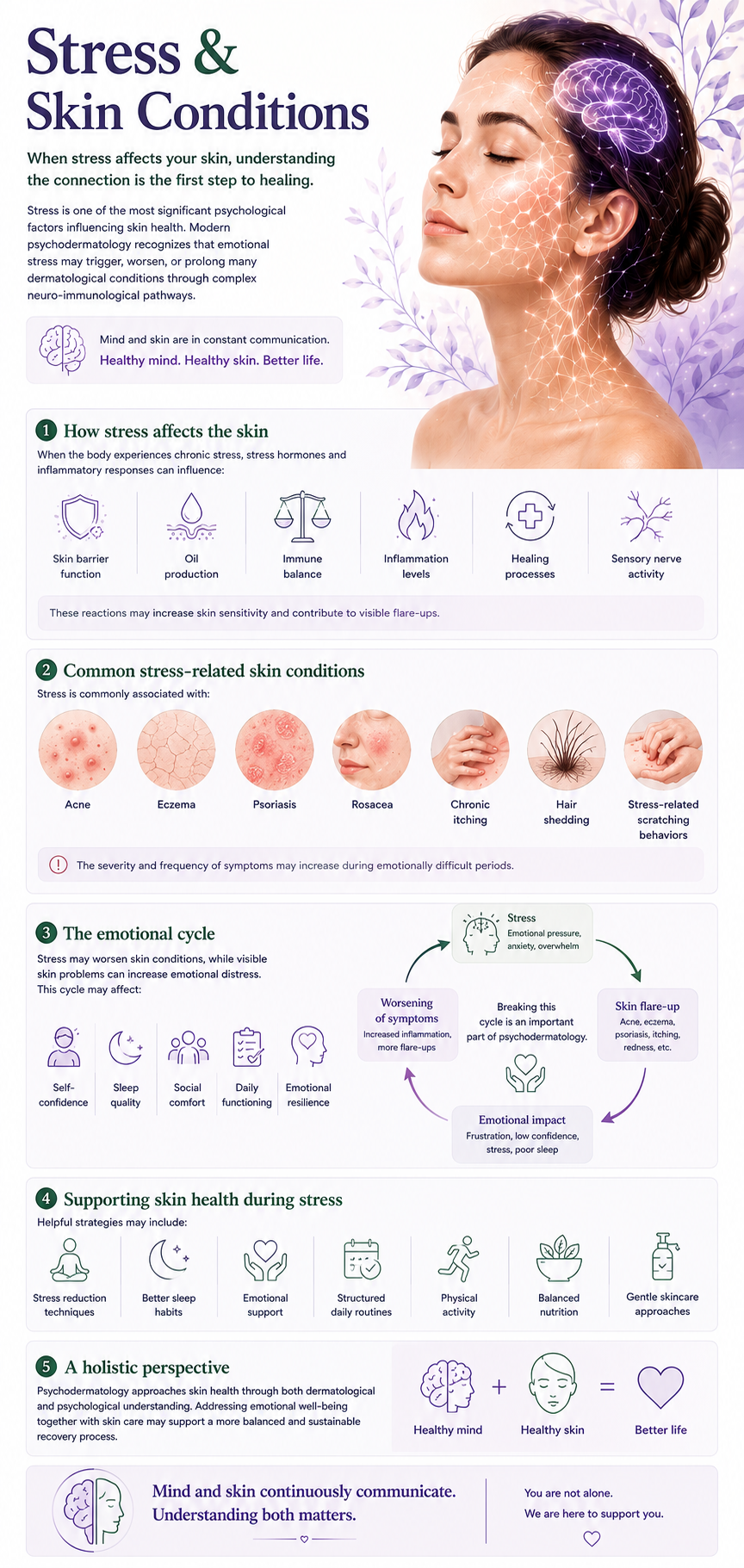
Stress & Skin Conditions
Stress is one of the most significant psychological factors influencing skin health.
Modern psychodermatology recognizes that emotional stress may trigger, worsen, or prolong many dermatological conditions through complex neuro-immunological pathways.
How stress affects the skin
When the body experiences chronic stress, stress hormones and inflammatory responses can influence:
- Skin barrier function
- Oil production
- Immune balance
- Inflammation levels
- Healing processes
- Sensory nerve activity
These reactions may increase skin sensitivity and contribute to visible flare-ups.
Common stress-related skin conditions
Stress is commonly associated with:
- Acne
- Eczema
- Psoriasis
- Rosacea
- Chronic itching
- Hair shedding
- Stress-related scratching behaviors
The severity and frequency of symptoms may increase during emotionally difficult periods.
The emotional cycle
Stress may worsen skin conditions, while visible skin problems can increase emotional distress.
This cycle may affect:
- Self-confidence
- Sleep quality
- Social comfort
- Daily functioning
- Emotional resilience
Breaking this cycle is an important part of psychodermatology.
Supporting skin health during stress
Helpful strategies may include:
- Stress reduction techniques
- Better sleep habits
- Emotional support
- Structured daily routines
- Physical activity
- Balanced nutrition
- Gentle skincare approaches
A holistic perspective
Psychodermatology approaches skin health through both dermatological and psychological understanding.
Addressing emotional well-being together with skin care may support a more balanced and sustainable recovery process.
Mind and skin continuously communicate. Understanding both matters.