
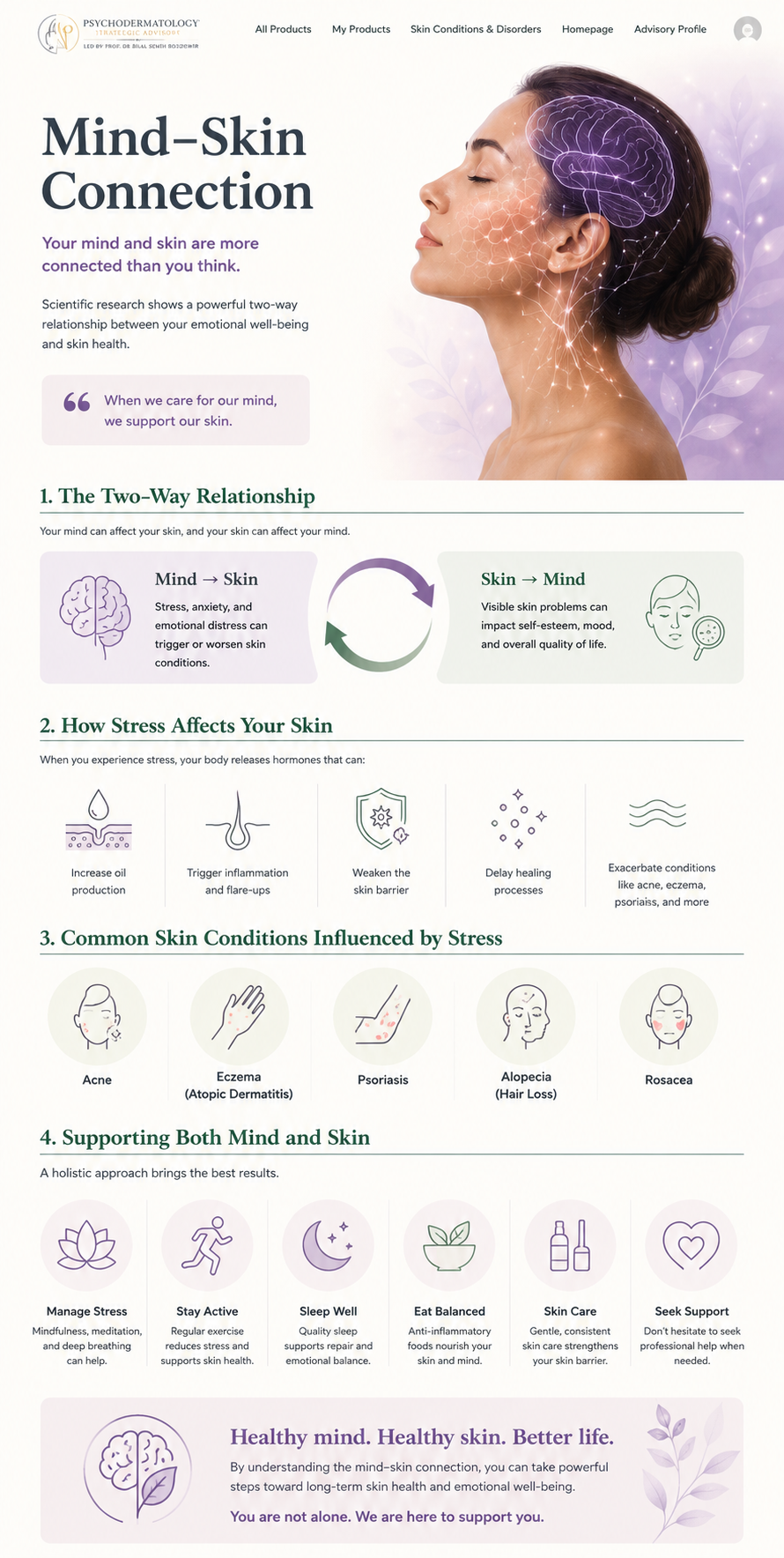
Your mind and skin are deeply connected
Scientific research shows that stress, emotions, anxiety, and psychological health can directly influence skin conditions.
At the same time, chronic skin problems may affect emotional well-being, confidence, self-esteem, and quality of life.
Psychodermatology studies this two-way relationship between the mind and the skin.
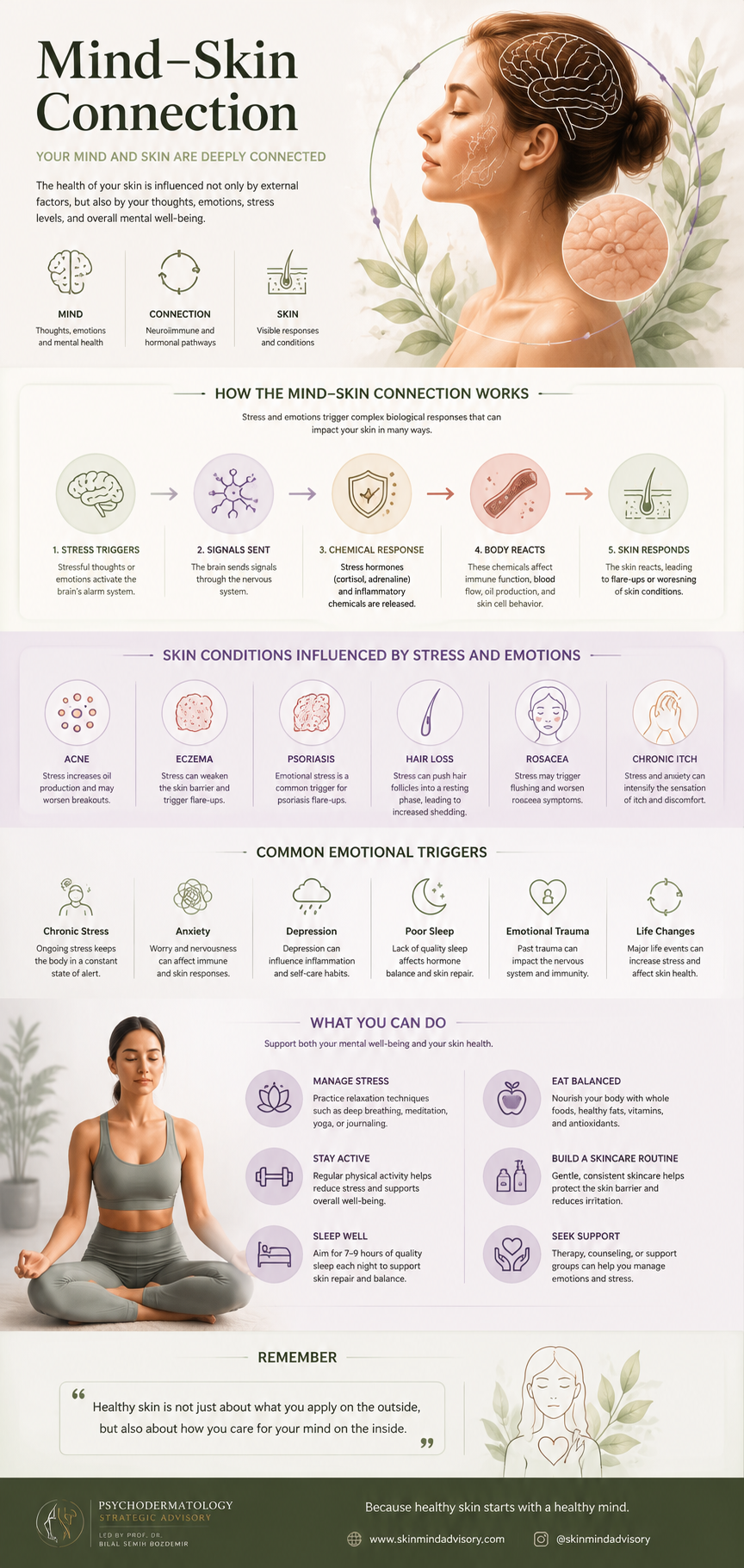
How stress affects the skin
Stress can:
- Increase inflammation
- Trigger acne flare-ups
- Worsen eczema and psoriasis
- Slow skin healing
- Increase skin sensitivity
- Contribute to hair loss
Common emotional triggers
- Anxiety
- Chronic stress
- Emotional trauma
- Poor sleep
- Depression
- Lifestyle imbalance
Supporting both mind and skin
A holistic approach may include:
- Stress management
- Sleep optimization
- Healthy nutrition
- Physical activity
- Gentle skincare routines
- Emotional support
Healthy mind. Healthy skin. Better life.
The Two-Way Relationship
The connection between the skin and the mind works in both directions.
Psychological stress can trigger or worsen inflammatory skin conditions, while visible skin disorders may negatively affect emotional well-being, confidence, and social life.
This interaction is now recognized as an important part of modern dermatological and psychological care.
Mind → Skin
Stress, anxiety, emotional pressure, and unresolved psychological distress may contribute to:
- Acne flare-ups
- Eczema worsening
- Psoriasis activation
- Increased itching
- Skin sensitivity
- Delayed healing
Skin → Mind
Chronic or visible skin conditions may lead to:
- Low self-esteem
- Social withdrawal
- Emotional distress
- Anxiety and depression
- Body image concerns
- Reduced quality of life
Why this matters
Psychodermatology focuses not only on the skin itself, but also on the emotional and psychological processes connected to skin health.
Understanding this relationship allows a more holistic and effective approach to long-term skin wellness.